
 EN
EN
 DE
DE  ES
ES  TR
TR  ID
ID  RU
RU  JA
JA  KO
KO 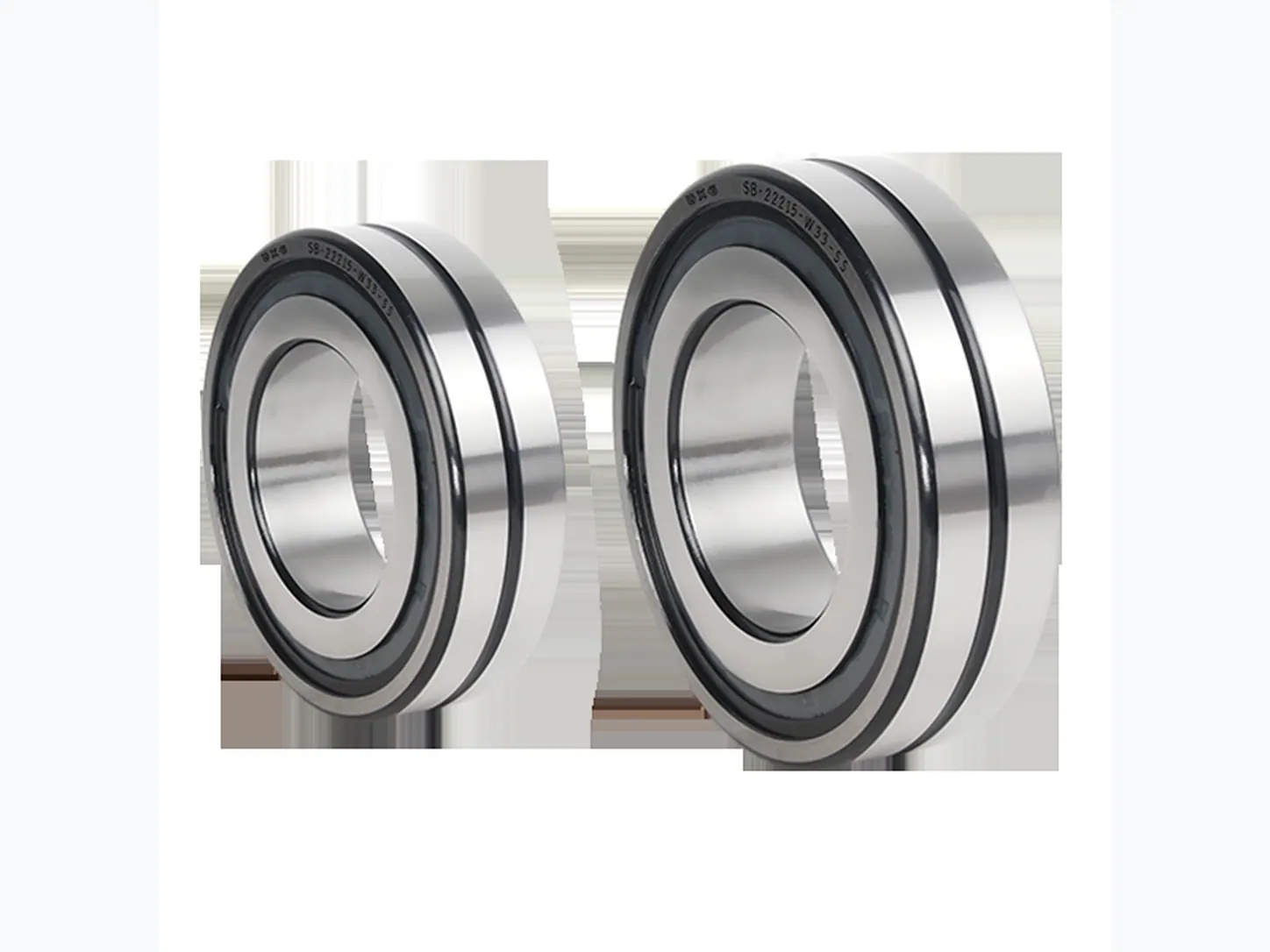
The Selection Trade-Off
Open bearings allow the machine designer to choose the housing seals, lubricant supply, and relubrication method. Sealed spherical roller bearings integrate contact seals and an initial grease fill, which may simplify maintenance in suitable positions.
Neither configuration is automatically the better choice. Compare the exact open and sealed model data because width, speed rating, grease, seal material, relubrication provisions, and suffixes can differ.
Conditions That May Favor a Sealed Bearing
A sealed configuration may be considered when contamination is difficult to control, the bearing position is hard to reach, or regular relubrication cannot be performed reliably.
Confirm all of the following before selection:
- seal material and chemical compatibility;
- published speed limit for the exact sealed model;
- continuous and peak temperature;
- initial grease type, fill quantity, and compatibility;
- whether relubrication is permitted or required;
- housing seals and pressure-washing exposure;
- axial space and any width difference from the open version.
Integrated bearing seals do not automatically replace every external housing seal. The complete sealing system still needs to manage water, dust, process material, pressure, and shaft movement.
Conditions That May Favor an Open Bearing
An open configuration may be considered when the position uses a controlled oil or grease supply, requires regular purging, operates beyond the selected seal’s speed or temperature limit, or needs a model or cage configuration that is not available in a sealed version.
Open bearings place more responsibility on the housing design and maintenance plan. Check the external seals, relubrication path, drain or purge arrangement, lubricant quantity, and inspection interval.
Commercial and Maintenance Comparison
| Factor | Open bearing questions | Sealed bearing questions |
|---|---|---|
| Bearing price | Which features are included in the selected open model? | Which seal and grease configuration is included? |
| Housing | Which external seals and lubricant fittings are required? | Are external barriers still required for the environment? |
| Lubrication | How will lubricant be supplied, purged, and monitored? | Is the fill-for-life claim valid for this speed and temperature, or is relubrication specified? |
| Maintenance | Can the position be serviced at the required interval? | Can seal condition and temperature be inspected? |
| Replacement | Is the shaft and housing envelope unchanged? | Does the sealed version have the same width and corner dimensions? |
Maintenance cost cannot be inferred from the word “sealed.” Use the expected service interval, labor access, lubricant consumption, seal replacement, downtime exposure, and bearing price for the actual position.
Application Review Examples
- Conveyor pulley: compare water and dust exposure, housing seals, shaft speed, access, and relubrication practice.
- Hot process equipment: compare the measured ring temperature with the seal and lubricant limits; do not choose clearance from temperature alone.
- Industrial fan: confirm speed, balance, temperature, lubricant supply, and whether seal drag is acceptable.
- Construction equipment: check mud, washdown, shock load, shaft movement, and external sealing.
- Paper-machine position: distinguish wet-end contamination from dryer-section temperature and evaluate each bearing position separately.
For a quotation, send the full model and suffix, open or sealed preference, speed, temperature, environment, current lubrication and sealing arrangement, quantity, and destination.