TFL Bearing
Maintenance & Reliability

Vibrating Screen Bearing Failure: Causes and RFQ Checklist

Troubleshooting guide for vibrating screen bearing failure, including overheating, cage damage, clearance problems, contamination, and replacement RFQ details.

July 1, 2026 7 min read Reviewed for sourcing context by TFL Bearing team
vibrating screenbearing failureoverheatingminingRFQ checklist
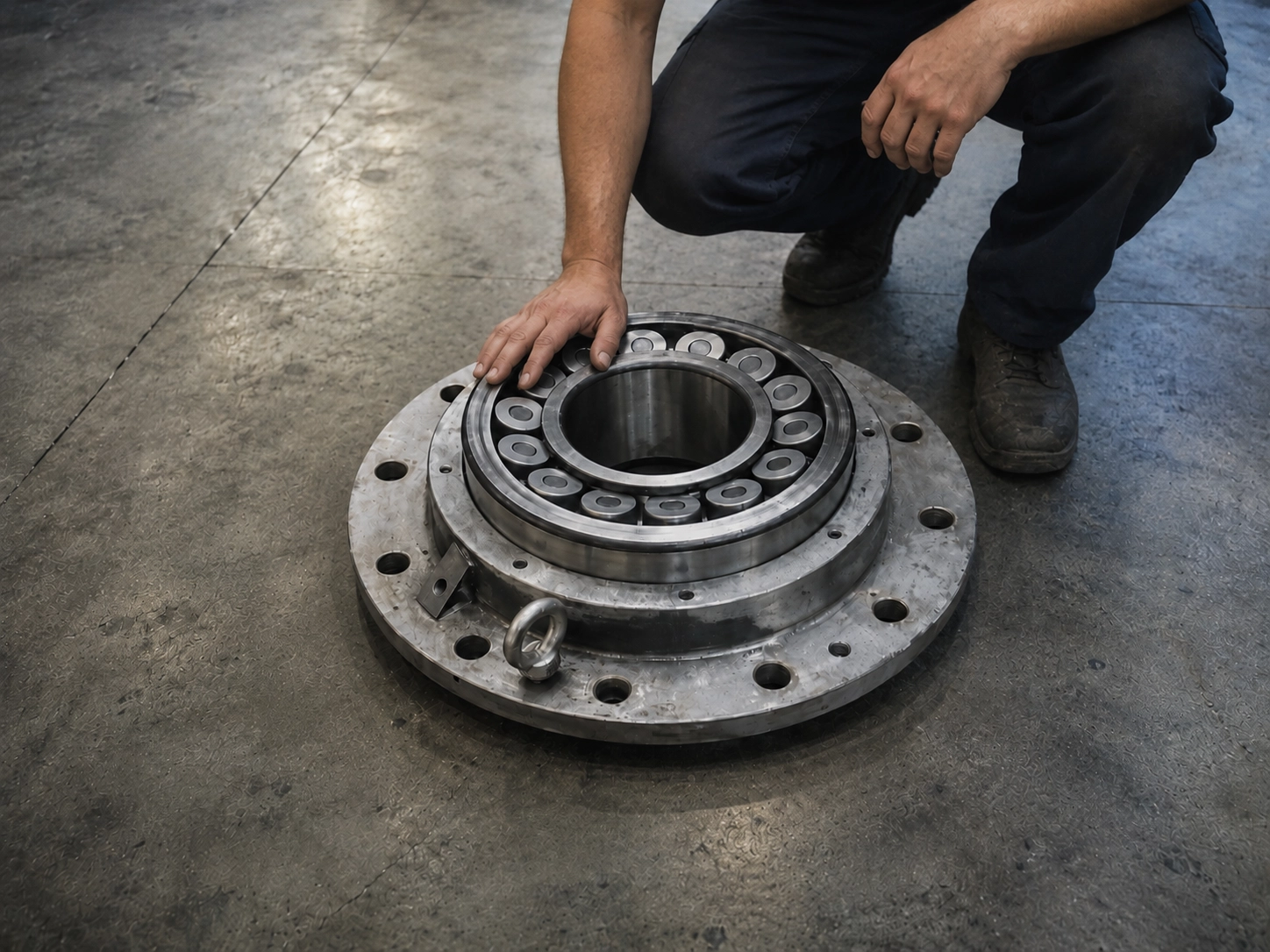
Spherical roller bearing technical review scene for RFQ context

When a Screen Bearing Fails, Start With the Symptom

Vibrating screen bearing failure is rarely a simple part-number problem. The same bearing number can fail for different reasons depending on screen acceleration, residual clearance, cage type, grease, dust control, and mounting method.

Before requesting a replacement quote, record what happened first. A bearing that overheated after installation points to a different RFQ discussion than a bearing with cage damage after months of service.

Common Failure Patterns

SymptomLikely CauseWhat to Check Before RFQ
Bearing runs hot soon after mountingResidual clearance too small, over-greasing, or tight fitFull suffix, bore type, mounting method, residual clearance
Cage cracks or fragmentsCage type not suitable for screen vibration, or severe roller skewCage suffix, screen acceleration, previous service life
Grease turns dark quicklyContamination, heat, or excessive relubrication intervalGrease type, interval, sealing, dust level
Outer ring creep or housing wearLoose housing fit or vibration loosenessHousing condition, bearing seat photo, fit tolerance
Repeated early spallingLoad, contamination, misalignment, or wrong clearanceScreen model, load condition, failed bearing photos

Clearance and Cage Details Matter

Many screen RFQs include only the bearing number. That is not enough. Vibrating screens often need specific clearance and cage decisions because the bearing is exposed to cyclic acceleration rather than steady rotation.

If the failed unit is marked with suffixes such as C3, C4, F80, CA, MA, MB, K, or W33, include the full marking in the inquiry. The suffix may explain the original design intent and helps avoid quoting a visually similar but unsuitable variant.

For background, review the vibrating screen bearing selection guide and the spherical roller bearing clearance guide.

Installation Clues to Record

For tapered bore screen bearings, the installation process can change the final running clearance. If the bearing was pushed too far onto the adapter sleeve, residual clearance may become too small and temperature can rise quickly.

Record these details if available:

  • bearing model and complete suffix
  • cylindrical bore or tapered bore
  • adapter sleeve or direct shaft mounting
  • measured clearance before and after mounting
  • grease type and fill amount
  • screen speed and approximate operating temperature
  • failure photos before the bearing is cleaned

Replacement RFQ Handoff

When you send an RFQ, include the screen model, current bearing number, suffix, cage, clearance, quantity, and the failure symptom. If the plant has a downtime target, mention that too.

Useful next pages:

Engineering Review

Not sure which bearing fits your case?

Send us the current model number, application equipment, operating speed, temperature, load, and quantity. TFL's bearing team can check clearance, cage, sealing, and cross-reference risk before you place an order.

Technical content reviewed for sourcing context by TFL Bearing team.

Request Technical Review

RFQ Details to Prepare

Send the details below so TFL Bearing can review the model, suffix, application risk, documents, and quotation route before confirming supply options.

RFQ detail Example Why it matters
current brand / model SKF 22222 EK/C3, FAG 22320-E1-K, NSK 22320EAKE4, or photo if unclear Brand and model references help identify suffix conventions and avoid assuming equivalence from dimensions alone.
full suffix / marking K, K30, C3, C4, W33, CA, CC, MB, 2RS, or full ring marking photo Suffixes can change bore type, clearance, cage design, lubrication groove, sealing, and replacement risk.
dimensions Bore x OD x width, measured bearing sample, or drawing dimensions Dimensions are a starting check, but they must be reviewed together with suffix and application.
application equipment crusher, vibrating screen, fan, gearbox, conveyor pulley, paper machine, or steel mill position Application context affects load, shock, speed, contamination, lubrication, and document review.
quantity 1 large bearing, 2 pcs for maintenance, 50 pcs distributor stock, or annual demand Quantity affects quote route, packing, production planning, inspection scope, and freight review.
destination Destination country, port, warehouse, distributor address, or project site region Destination affects export documents, packing method, shipping route, and trade-term review.
required documents Inspection report, material certificate, COO, RoHS / REACH statement, packing photos, buyer template Document requirements must be confirmed before quotation because scope depends on order route and buyer template.
full bearing model 22222 EK/C3 W33, 22320 CAK/W33, or photo of the full marking Identifies the series, size group, bore style, clearance reference, and starting point for quotation review.

Ask TFL to Check Your Bearing

Share the basics and TFL Bearing will review the sourcing context for your RFQ.

Engineering Support

Need Bearing Selection Advice?

Send us your application details, bearing specifications, or BOM. TFL Bearing can review model fit, sourcing risk, and available documentation before quotation.